
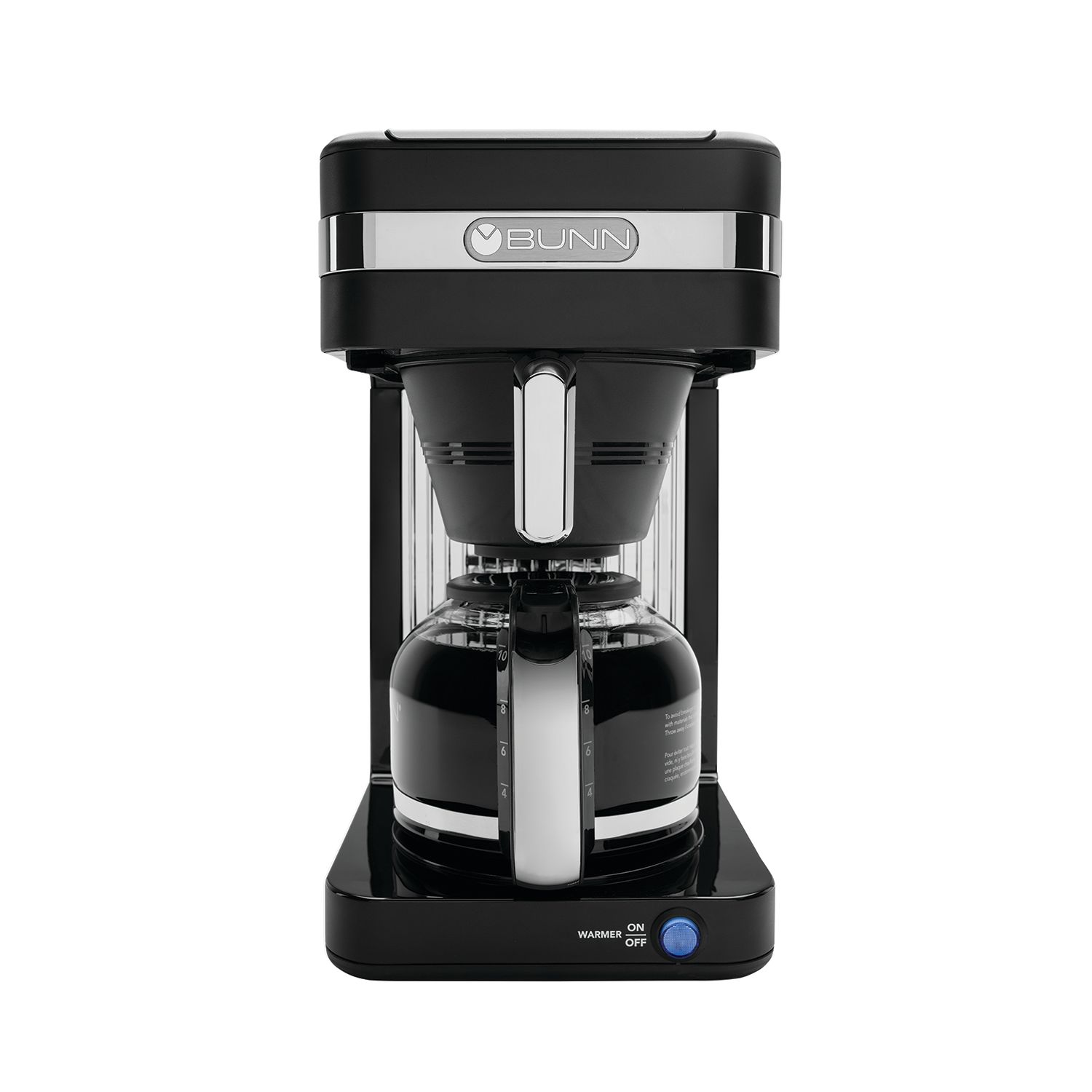
Your needs, this model
Does it fit your priorities?
Do you need a brewer specifically designated for 4,000 feet and above?
BUNN lists this exact CSB2B as High Altitude and says its preset accommodates the lower boiling point at 4,000 ft and above. Standard CSB2B item 52700.0002 is a separate configuration; the shared manual does not state a maximum elevation for the preset model.
Explore this need in the finder →Would a 20-ounce travel mug or a 50-ounce glass pot cover your normal batch?
The exact page lists a 20-ounce mug route and a 50-ounce glass carafe; the linked family manual’s capacity chart uses five-ounce cups and 20/30/40/50-ounce pours. This is not a pod-size menu.
Explore this need in the finder →Do you want the high-altitude version but need a programmed start?
The exact page and linked family manual describe a measured, user-started pour-in routine. The sources do not document delayed-start programming; an always-hot water tank is not a clock timer.
Explore this need in the finder →BUNN · Speed Brew Elite · high-altitude glass-carafe configuration
A manually started, grounds-only brewer for a household that wants a quick mug or glass-pot routine and specifically needs BUNN’s high-altitude preset. The altitude designation—not a menu of custom brew styles—is the reason to choose this version.
What the high-altitude version changes
BUNN identifies item 52700.0202 as the black CSB2B High Altitude Speed Brew Elite. Its exact U.S. product page says the model is designed for locations above 4,000 feet and is preset to accommodate the lower boiling point at 4,000 feet and above. That is a meaningful distinction from standard CSB2B item 52700.0002, not a feature inferred from the similar shell. The maker does not publish a maximum elevation or a user-adjustment procedure on the page I reviewed, so I would not translate the designation into a claim about every mountain altitude or a promise of identical extraction everywhere.
For a buyer who does not live at the stated threshold, this preset is not a reason to pay more or choose this SKU by itself. The standard and high-altitude versions are both described as simple pour-in machines with the same glass carafe and switch-operated warming plate. If you are above the stated threshold, select the exact high-altitude item number rather than relying on a retailer’s broad “Speed Brew” title.
A fast routine that still asks you to measure water
The CSB2B keeps 70 ounces of water hot in an internal tank. To make coffee, you fill the front pour-in bowl with the amount needed for the drink and close the lid; BUNN’s support instructions say the bowl should not be left filled overnight. The maker advertises a 20-ounce travel-mug brew in two minutes and a full 50-ounce carafe in four. Those are BUNN’s own comparisons based on its internal testing, not independent timing results. The convenience is readiness and a short stated brew cycle, rather than a programmable machine that wakes up to a set time.
The product page describes a multi-stream sprayhead and a taller funnel intended for BUNN filters. The linked Speed Brew family manual uses a five-ounce cup convention and gives 20-, 30-, 40- and 50-ounce water amounts for four, six, eight and ten cups. It names the broader CSB2 family, while the current support page spells out CSB2B and CSB2G. That is a useful operating reference, but it is not a manual cover printed with the full retail SKU. The sources establish a paper-filter routine; they do not confirm a reusable filter or a filter included in the box.
Glass pot and warming plate: a familiar tradeoff
This version brews to a 50-ounce glass carafe, which BUNN labels ten cups. Using the manual’s five-ounce cup convention, it is a useful pot for a few people or repeated cups over a morning, not a ten-large-mug promise. The warming plate has its own switch, so the owner can leave it off after brewing or turn it on to keep the pot warm. That flexibility also means the pot is not insulated: when the plate is off, the glass carafe does not retain heat like a thermal pot. The carafe and plate make the coffee visible and easy to pour, but add a breakable glass piece and a hot surface to keep clean.
The single-mug route is a separate 20-ounce water pour, rather than a pod slot or a range of small cup-size buttons. If your travel tumbler is taller than the opening allows, verify the fit before choosing; BUNN’s page confirms the volume, not clearance for every mug shape. The machine offers no documented strength selector, delayed-start timer, cold-brew cycle or independently dispensed hot-water function. The always-hot tank is for brewing, not a second cup-of-tea faucet.
Exact variants and practical limits
The same high-altitude function is sold as gray CSB2G item 52700.0200. BUNN’s title and subtitle identify that SKU as the gray CSB2G, though one feature bullet on the page repeats matte-black finish wording; check the exact item and current product image if color is important. Its stated dimensions are 13.8 inches high, 7.7 wide and 12.4 deep, matching the black high-altitude page. The standard gray CSB2G item 52700.0000 is a separate standard-altitude choice and lists 12.7 inches of depth. The finish variants share this review’s high-level routine, but those item numbers should not be treated as interchangeable when altitude matters.
The BUNN page lists a three-year Speed Brew warranty and says the product is designed and assembled in the United States. It does not give weight, standby electricity use, a noise level, or a detailed included-accessory list. The page notes a flow restrictor is sold separately in a Speed Brew parts bundle; BUNN support discusses a special restrictor for some decaf or fine-ground coffee and soft-water situations. That is a separate water-flow issue, not evidence that the high-altitude preset requires the part.
Who should compare it with something else?
Compare standard CSB2B 52700.0002 if you do not need the high-altitude designation. Compare the CSB3T thermal-carafe family if you want insulation rather than a warming plate; the CSB3T’s 50-ounce thermal pot changes how brewed coffee is held, while the CSB2 uses glass and a switchable plate. Look to a programmable brewer if a clock-start matters more than a ready hot-water tank. The CSB2B High Altitude earns its place when the exact altitude requirement and the fast, manual mug-or-carafe routine both match your kitchen. Otherwise, the standard version or a different carafe style is the more relevant comparison.
Key details at a glance
| Coffee formats | grounds |
|---|---|
| Brew styles | drip |
| Integrated coffee grinder | No |
| Pod serving size or maximum | oz |
| Capsule format | False |
| Over Ice single-serve size | [] oz |
| Finished-coffee serving vessel | Carafe |
| Carafe capacity | 10 cups |
| Carafe | Glass carafe |
| How a finished batch stays warm | Electric warming plate |
| Adjustable warming-plate temperature | No |
| Bold/Regular strength control | No |
| Dedicated 1–4 cup batch setting | No |
| Separate hot-water route | No |
| Manual steam wand | No |
| Milk-frothing tool included | No |
| Milk-frothing tool heats milk | No |
| Electrical input | 900 W |
| Voltage | 120 V |
| Documented single-cup servings or maximums | 20 oz |
| Cold Brew with grounds | No |
| Over Ice with pods | No |
| Single-serve grounds sizes | oz |
| High-altitude configuration | Yes |
Use the exact model’s instructions for operating limits, supplied equipment and version differences.
Sources for this assessment
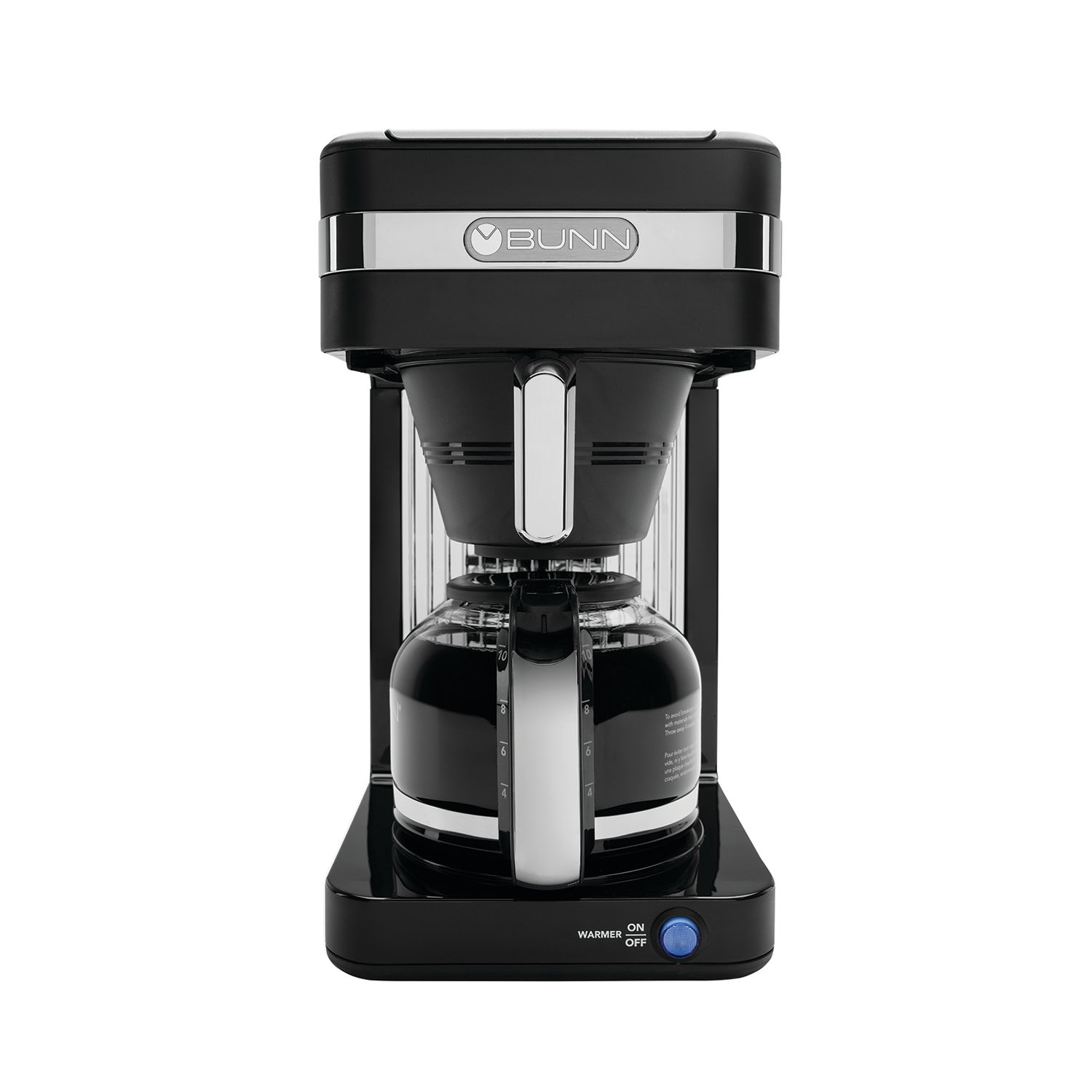
Match the carafe to your coffee routine.
Choose between a warming plate and an insulated pot, then check what the exact box includes.