
Your needs, this model
Does it fit your priorities?
Do you need the standard-altitude CSB2B glass-pot routine rather than a high-altitude preset?
This exact 52700.0002 page identifies standard CSB2B. The shared Speed Brew manual says standard models are not designed above 4,000 feet; BUNN lists a distinct CSB2B High Altitude model for locations at that threshold.
Explore this need in the finder →Would a 20-ounce travel-mug route meet your largest documented single-mug need?
BUNN describes a 20-ounce mug pour. It does not list a larger one-mug setting or a pod-based serving-size menu for this model.
Explore this need in the finder →Can you accept a measured manual brew instead of pods or a scheduled start?
The exact page and linked family manual describe a manually started pour-in bowl, paper-filter funnel and glass pot or mug route. The reviewed sources do not document a pod adapter or timer program.
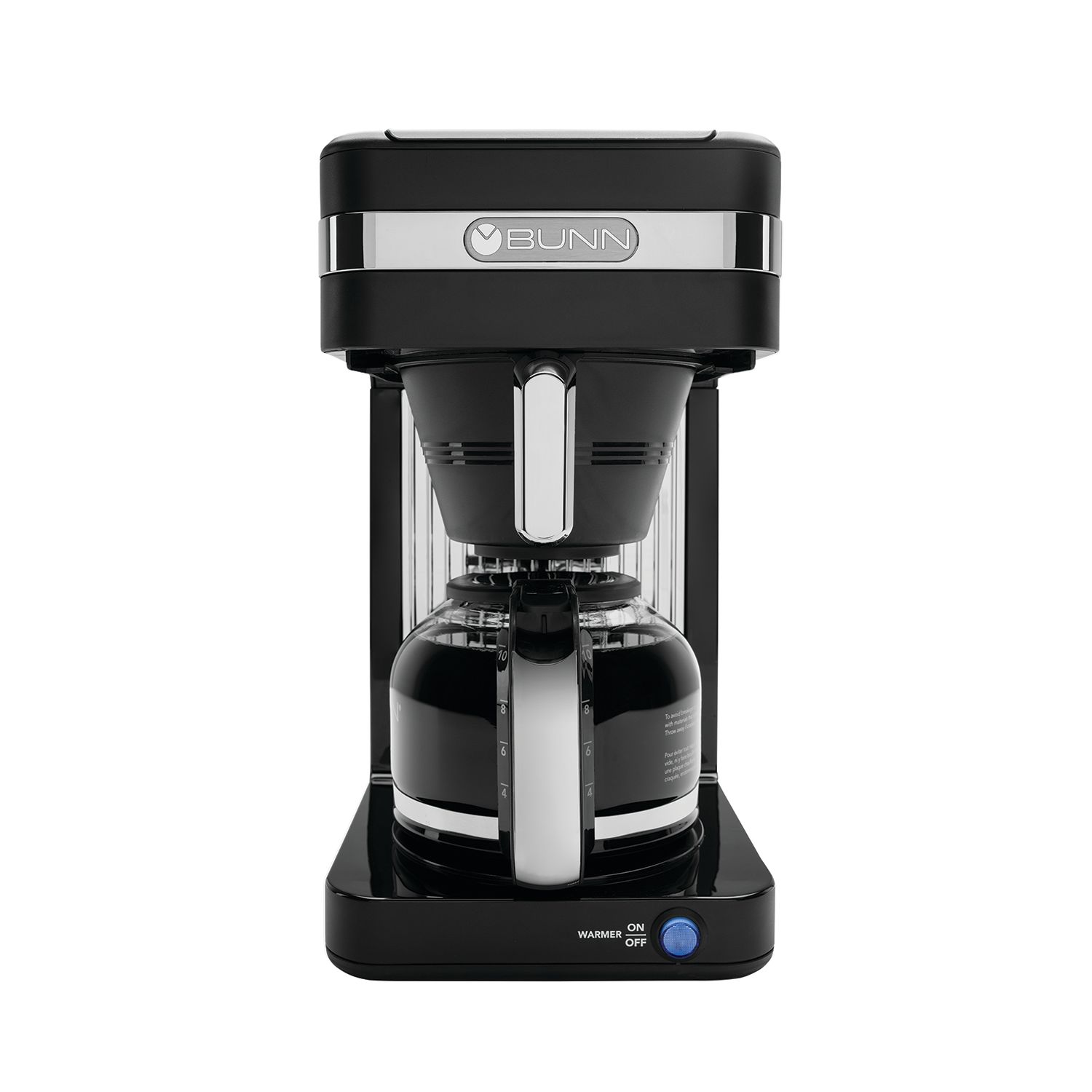
Explore this need in the finder →BUNN · Speed Brew Elite · standard-altitude glass-carafe configuration
A grounds brewer built around an always-hot tank, a measured water pour and a quick glass-carafe or travel-mug routine. It suits someone who wants coffee ready quickly after starting a brew—not someone shopping for a timer, pod menu or insulated pot.
Understand the routine before buying
The CSB2B is a 10-cup Speed Brew Elite with a 70-ounce internal hot-water tank. BUNN’s exact page describes 20 ounces to a travel mug in two minutes or a 50-ounce carafe in four minutes. Those are manufacturer claims based on internal comparisons, not measurements from this review. The appliance remains warm between brews, but the user still pours water into its top bowl for each batch and closes the lid to release that water into the tank. This is less like filling a removable reservoir and pressing a menu button, and more like using a ready tank to make a measured brew on demand.
That can be a good fit for a frequent coffee household: the page’s short stated brew time makes a second pot or a single 20-ounce mug plausible without waiting through a conventional full cycle. It also means the design has an always-hot standby tank and a manual start. The manufacturer sources reviewed here do not state electricity use in standby, so energy cost cannot be calculated from the advertised speed. The speed should be weighed against the hot-water system and the owner’s willingness to keep it powered, rather than treated as a free convenience.
Paper-filter coffee and a glass pot
The standard CSB2B brews grounds through a tall funnel and BUNN describes its multi-stream sprayhead as spreading water over the bed. BUNN says its taller filters are a quarter-inch taller than other filters and are designed for the funnel; the family manual likewise tells owners to use BUNN filters and warns that the wrong size or porosity can contribute to an overflow. A reusable permanent filter is not confirmed for this reviewed configuration, and I would not assume an arbitrary basket filter fits. The box contents are not fully itemized on the exact page, so the required paper-filter routine is clearer than whether a starter supply is included.
The 50-ounce glass carafe is called ten cups by BUNN. The manual’s cup is five ounces, so it is better to treat that label as a maker-defined capacity than as ten full-size mugs. For smaller groups, the manual lists four-, six- and eight-cup batches alongside ten cups, using 20, 30, 40 and 50 ounces of water. The exact page separately lists a 20-ounce travel mug route. These are manual pour amounts, not an adjustable single-cup menu. The glass pot sits on a warmer plate with its own switch. Turn the plate on when you want a heated pot, or leave it off; either way, the glass does not provide the passive heat retention of the CSB3T thermal-carafe models.
What the standard version does not cover
This is the standard-altitude CSB2B item 52700.0002. BUNN’s shared Speed Brew manual warns that standard units are not designed for locations above 4,000 feet, and the company lists a separate high-altitude CSB2B item, 52700.0202, preset for the lower boiling point at 4,000 feet and above. If that describes your location, compare the exact high-altitude item instead of assuming the standard model can be tuned by the owner. The maker does not publish a maximum altitude for the preset version.
The CSB2B also does not have a documented delayed-start program, pods, selectable brew strength or a dedicated hot-water outlet. BUNN’s support page says the pour-in bowl should not hold water overnight and explains that the internal tank needs time to heat during setup; the manual covers the filling, cleaning and descaling routine. This is not a “set up tomorrow’s pot tonight” appliance. A typical day begins with the tank already hot, fresh measured water for the batch, and used grounds and filter removed afterward.
Exact model and finish checks
The black CSB2B 52700.0002 is the base product reviewed here. BUNN also lists a gray CSB2G standard model, item 52700.0000. Its exact product page publishes the same 70-ounce tank, 20-ounce mug and 50-ounce glass-pot arrangement, but lists 12.7 inches of depth instead of the black model’s 12.4. That three-tenths-inch difference matters in a tight counter run. The CSB2G high-altitude 52700.0200 is a different item again; its title identifies it as gray, while one feature line repeats the black-finish copy. Check item numbers and current product imagery before a finish-sensitive purchase.
BUNN lists a three-year warranty for Speed Brew models, a switch-operated warmer, and U.S. design and assembly. The reviewed page does not provide the appliance’s weight, exact standby power draw or full carton inventory. It also notes that a flow restrictor is sold separately with a parts bundle; support says some decaf or fine-ground coffee and soft-water combinations may need a special restrictor. That part is a conditional flow aid, not a brew-strength control or an altitude accessory by definition.
Choose it for speed and simplicity, not menus
For a household below BUNN’s high-altitude threshold that repeatedly makes a mug or a small-to-full glass pot, the CSB2B’s distinctive strengths are its hot tank, simple controls and short maker-stated cycle. If you prefer an insulated carafe and no powered warming surface, compare the CSB3T. If you want pods, clock programming, a removable cold-water reservoir or a broad cup-size menu, a Keurig or hybrid brewer is a better starting point. And if you live at 4,000 feet or above, compare the high-altitude CSB2B rather than this standard model. The right choice depends less on the “10-cup” headline than on whether this measured-pour routine matches how you actually make coffee.
Key details at a glance
| Coffee formats | grounds |
|---|---|
| Brew styles | drip |
| Integrated coffee grinder | No |
| Pod serving size or maximum | oz |
| Capsule format | False |
| Over Ice single-serve size | [] oz |
| Finished-coffee serving vessel | Carafe |
| Carafe capacity | 10 cups |
| Carafe | Glass carafe |
| How a finished batch stays warm | Electric warming plate |
| Adjustable warming-plate temperature | No |
| Bold/Regular strength control | No |
| Dedicated 1–4 cup batch setting | No |
| Separate hot-water route | No |
| Manual steam wand | No |
| Milk-frothing tool included | No |
| Milk-frothing tool heats milk | No |
| Electrical input | 900 W |
| Voltage | 120 V |
| Documented single-cup servings or maximums | 20 oz |
| Cold Brew with grounds | No |
| Over Ice with pods | No |
| Single-serve grounds sizes | oz |
| High-altitude configuration | No |
Use the exact model’s instructions for operating limits, supplied equipment and version differences.
Sources for this assessment
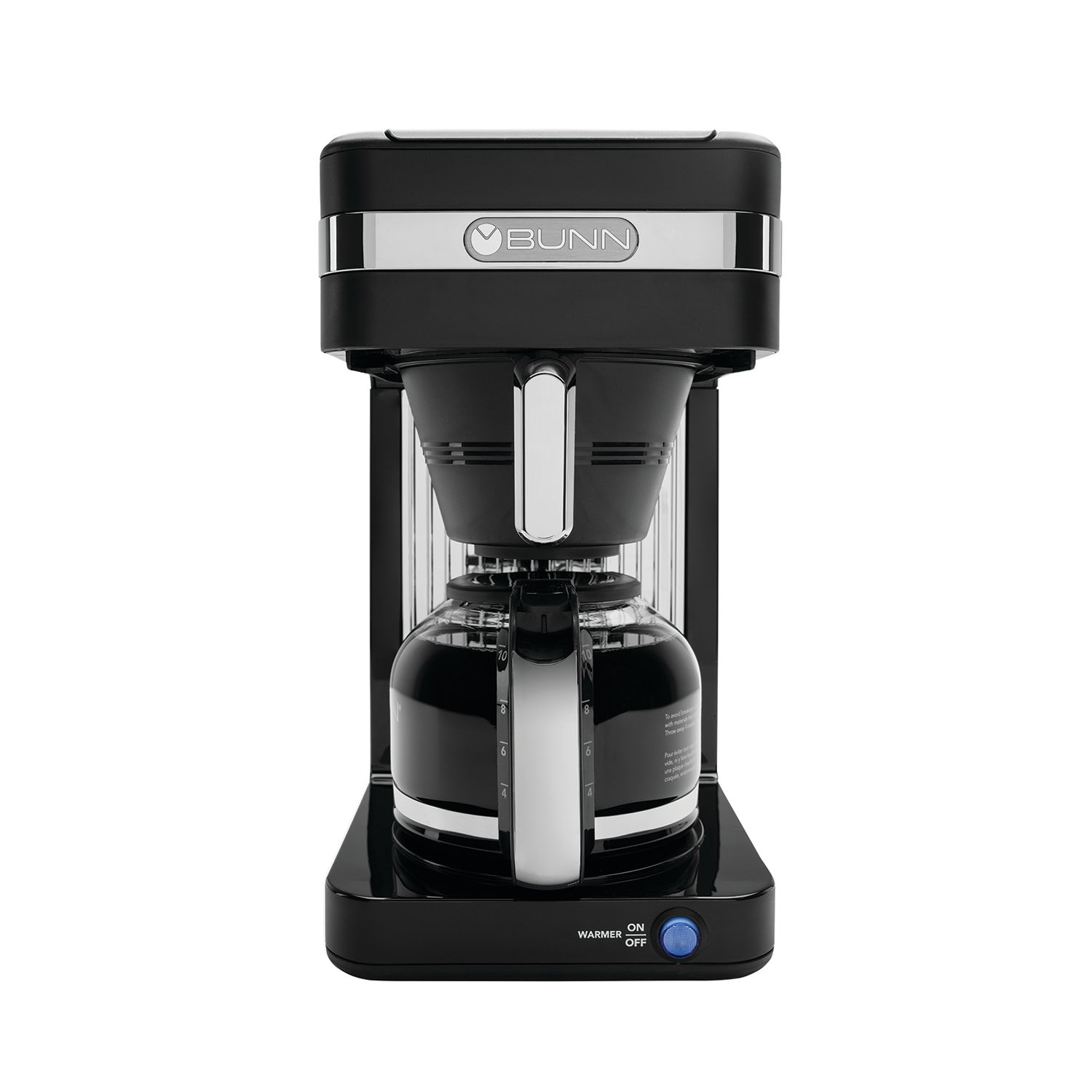
Match the carafe to your coffee routine.
Choose between a warming plate and an insulated pot, then check what the exact box includes.