
Your needs, this model
Does it fit your priorities?
Do you need a brewer designated for a home at 4,000 feet and above?
BUNN identifies exact item 55200.0200 as a CSB3T High Altitude model and says it is preset for lower boiling at 4,000 feet and above. The standard 55200.0000 is a separate non-high-altitude version.
Explore this need in the finder →Would a thermal carafe and one 20-ounce travel-mug route cover your grounds routine?
BUNN lists a 50-ounce thermal carafe and a 20-ounce mug brew; the CSB3T manual uses five-ounce cups and a 20/30/40/50-ounce water chart. This is not a selectable pod-size menu.
Explore this need in the finder →Do you need an altitude-specific brewer but still expect a programmed start?
The .0200 page establishes the altitude preset, but Speed Brew operates from a manual measured-water pour and the reviewed sources do not document a timer or scheduled start.
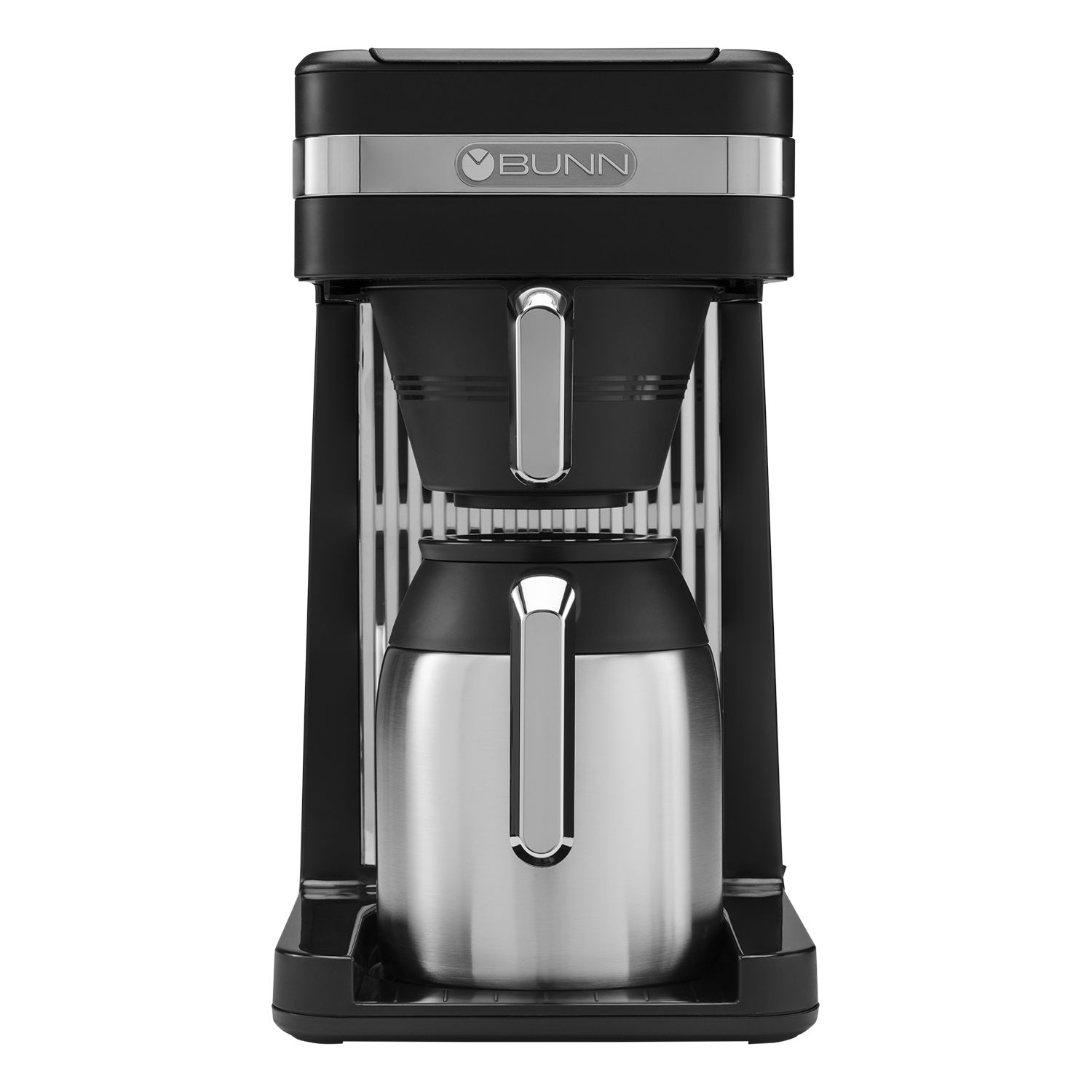
Explore this need in the finder →The BUNN CSB3T High Altitude Speed Brew Platinum Thermal (item 55200.0200) is the altitude-specific version of BUNN’s grounds-first, always-hot-tank brewer. BUNN says it is preset for the lower boiling point at elevations of 4,000 feet and above. The standard CSB3T item 55200.0000 is a separate version, not designed for those locations. If you brew below that threshold, compare the standard model rather than relying on the shared CSB3T name.
Altitude is the deciding difference
The manufacturer’s item page names 55200.0200 the “High Altitude” CSB3T and says it is preset for lower boiling at 4,000 feet and above. The family manual warns that standard Speed Brew units are not designed above 4,000 feet and tells high-altitude owners to check for a D marking underneath the brewer. This is an internal configuration, not a menu you toggle at brew time. BUNN gives no upper elevation limit, so its documented threshold should not be extended into a promise for every mountain elevation.
The exact page also describes a 70-ounce internal tank of hot brewing water, a 50-ounce thermal carafe and a 20-ounce travel-mug route. Its roughly four-minute carafe and two-minute mug timings are manufacturer claims, not independent measurements. The tank holds water, not finished coffee, and is not a separate hot-water tap.
A manual water-pour routine, not a timer
Speed Brew keeps brewing water ready. Before first use, the manual requires a tank-fill sequence and says not to plug in until the initial steps are complete. For each batch, add grounds to the funnel, measure fresh water in the carafe, pour it into the top bowl and close the lid. The incoming water pushes the stored hot water through the coffee; the tank reheats for later. This is not a one-button programmable pot: no delayed start, pods, strength menu or app control is documented for this configuration.
The manual defines a cup as five ounces: 20, 30, 40 and 50 ounces of water make the four-, six-, eight- and ten-cup batches. BUNN also lists a 20-ounce mug brew. That suits a large commute cup, but is not a menu of smaller pod servings or a reusable grounds-cup routine. For a 12-ounce pod cup or programmed morning start, a pod or hybrid machine fits more naturally.
Thermal carafe instead of a hot plate
The Platinum Thermal version sends coffee into a vacuum-insulated pot rather than a warming plate. BUNN claims a two-plus-hour hold; the manual says about two hours and recommends preheating the carafe for 30 seconds. You avoid a powered plate but handle and rinse a tall pot. It is not dishwasher-safe, and its stainless surfaces should not be scrubbed with abrasives. The manual gives the brewer a three-year warranty and an included thermal carafe a separate one-year term.
The page lists 14.9 inches high, 8.3 inches wide and 13.7 inches deep. It does not publish standby energy use, a maximum elevation or package contents. Since the tank stays hot, a household that prefers heating only at a scheduled brew time may choose another design; no watt-hour figure is supplied for estimating this brewer’s standby cost.
Filters and care are part of owning it
This is a grounds-only brewer that uses a paper filter in its tall brew funnel. BUNN says its filters are a quarter inch taller than other filters, and the manual warns that a filter with the wrong size or porosity can overflow. The exact page also lists a flow-restrictor parts bundle as sold separately. That optional part is not the high-altitude feature and is not listed as included; do not confuse the two. The manual suggests that fine grounds, decaf or soft water can make a special flow-restrictor sprayhead useful, so the right accessory depends on the coffee and water routine rather than altitude alone.
The tank and sprayhead need periodic mineral maintenance. BUNN recommends routine cleaning about every three months, with frequency adjusted for water mineral content, and its manual describes a vinegar cycle followed by several fresh-water flushes. Before removing parts or cleaning near the tank, switch it off, unplug it and allow the water to cool; the manual warns that cooling can take up to two hours. These steps are not unique to the altitude model, but they matter because a brewer designed to stay hot is more involved than a simple cold-reservoir drip machine.
Who should choose 55200.0200?
Choose this configuration when your home meets BUNN’s altitude threshold, you want a grounds-only 20-ounce mug or 20-to-50-ounce thermal batch, and a measured pour is acceptable. It keeps the CSB3T thermal routine while addressing the altitude limit on standard 55200.0000. Below 4,000 feet, compare the standard model. For glass and plate warming, scheduled brewing, pods or an internal coffee reservoir, look beyond both CSB3T versions.
The practical trade is therefore not simply fast versus slow. It is whether an altitude-preset machine, an always-hot water tank, a thermal carafe and a manually started measured-water routine match your kitchen. If those constraints describe your situation, this is the relevant CSB3T. If they do not, the altitude label adds no documented everyday brew mode that would make it a better general-purpose choice than another brewer.
Key details at a glance
| Coffee formats | grounds |
|---|---|
| Brew styles | drip |
| Integrated coffee grinder | No |
| Pod serving size or maximum | oz |
| Over Ice single-serve size | [] oz |
| Finished-coffee serving vessel | Carafe |
| Carafe capacity | 10 cups |
| Carafe | Vacuum-insulated thermal carafe |
| How a finished batch stays warm | Vacuum insulation; no warming plate |
| Permanent coffee filter included | No |
| Adjustable warming-plate temperature | No |
| Bold/Regular strength control | No |
| Dedicated 1–4 cup batch setting | No |
| Separate hot-water route | No |
| Manual steam wand | No |
| Electrical input | 850 W |
| Voltage | 120 V |
| Documented single-cup servings or maximums | 20 oz |
| Cold Brew with grounds | No |
| Over Ice with pods | No |
| Single-serve grounds sizes | oz |
| High-altitude configuration | Yes |
Use the exact model’s instructions for operating limits, supplied equipment and version differences.
Sources for this assessment
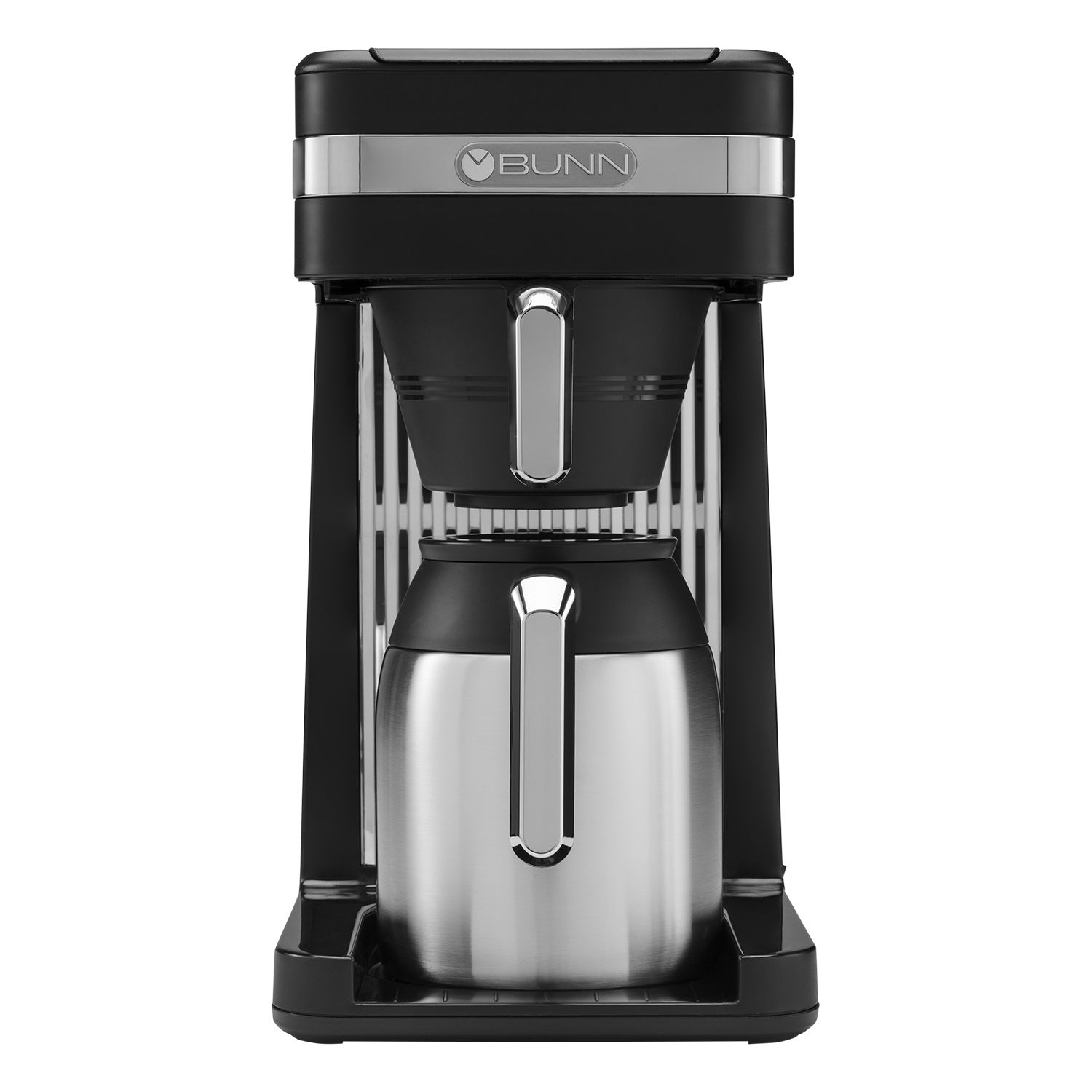
Match the carafe to your coffee routine.
Choose between a warming plate and an insulated pot, then check what the exact box includes.