
Your needs, this model
Does it fit your priorities?
Do you want a 10-cup thermal pot with no warming plate?
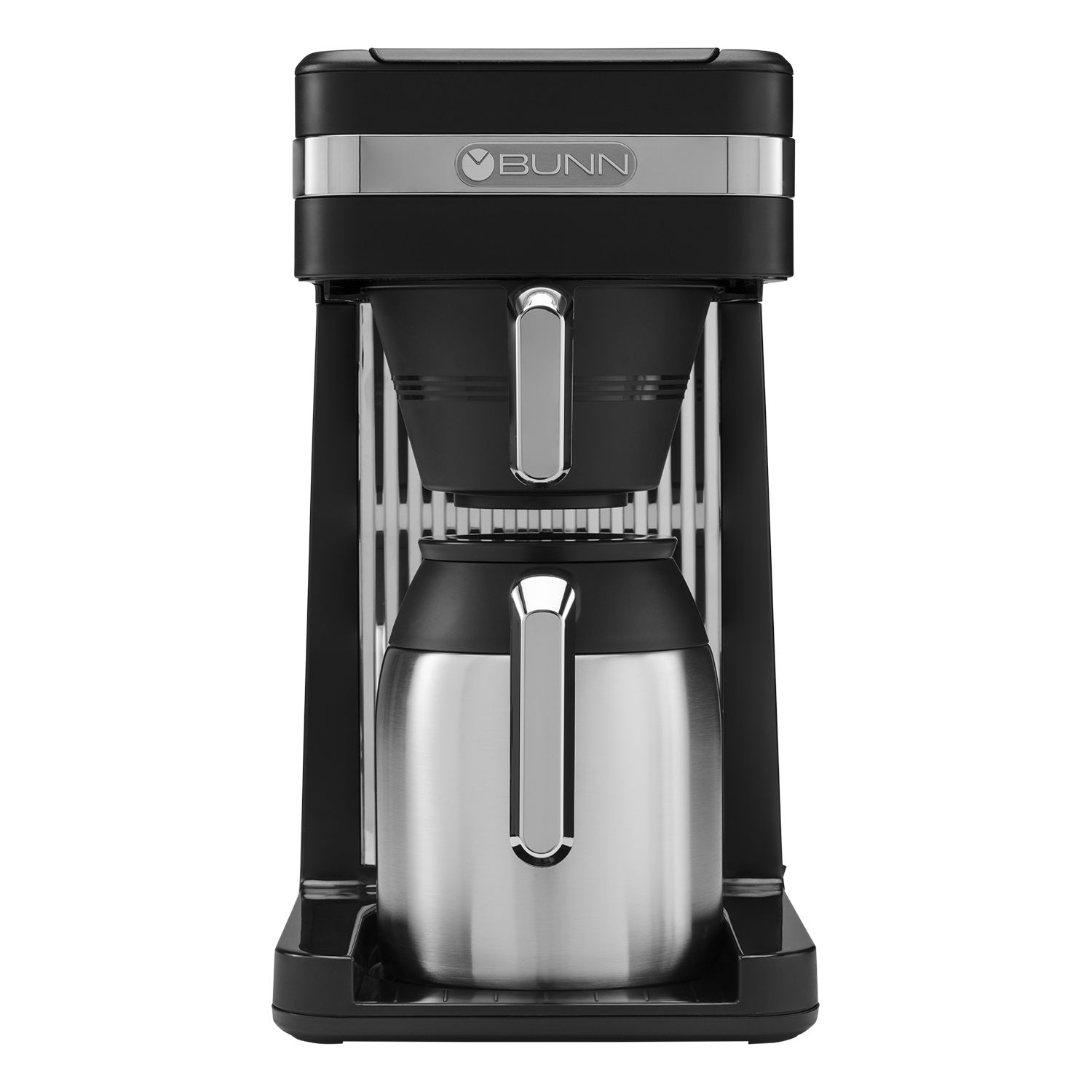
The exact CSB3T product page lists a 50-ounce vacuum-insulated thermal carafe, and its owner manual uses 5-ounce cups in the 10-cup batch chart. Coffee stays in the insulated carafe rather than on a powered plate.
Explore this need in the finder →Would one documented 20-ounce travel-mug brew meet your largest-cup need?
BUNN lists a 20-ounce travel-mug brew. That is a grounds routine, not a pod-sized serving menu; a larger one-mug requirement is not documented for this exact configuration.
Explore this need in the finder →Is a manually started, grounds-only routine acceptable instead of pods or a scheduled start?
The exact CSB3T page and model-compatible manual describe grounds in a brew funnel, a measured water pour and a thermal pot or mug. They do not document pod brewing or delayed-start programming.
Explore this need in the finder →The BUNN CSB3T Speed Brew Platinum Thermal (item 55200.0000) is a grounds-first brewer for people who would rather pour water into a hot tank and collect coffee in an insulated pot than wait for a conventional cold-start drip cycle. Its central trade is easy to miss in the headline: this is quick because BUNN keeps brewing water hot inside the machine. The exact product page identifies a 70-ounce stainless-steel hot-water tank, a 50-ounce thermal carafe and a separate 20-ounce travel-mug route. It is not a pod brewer, and the 70-ounce tank holds water, not brewed coffee.
Always-ready water changes the routine
BUNN's setup is intentionally different from a standard programmable drip maker. The model-compatible manual tells owners to complete an initial fill and flush sequence before switching the tank on, then wait 15 minutes for the water to heat. During a normal brew, the user measures water in the carafe, pours that amount into the brewer's pour-in bowl, closes the lid and lets the flow begin. The manual lists 20, 30, 40 and 50 ounces for its four batch amounts. That means no measuring by an app or selecting a clock-based start: the person making coffee starts the brew and chooses the volume with the water poured in.
The page calls the 70-ounce water tank “always hot.” That is useful when a household wants a quick refill-and-brew routine, but it is a real operating choice, not an invisible feature. There is no published energy-use number in the reviewed material, so a buyer cannot calculate the standby cost from the page or manual. If you would rather add cold water and let a brewer heat it only when the timer starts, a conventional programmable model is a better match. BUNN says the full carafe takes about four minutes and a 20-ounce mug about two; those are manufacturer claims, not timings from an independent test.
Ten “cups” means a 50-ounce pot
The manual is unusually helpful about capacity units: its chart defines a cup as five ounces. It pairs 20 ounces with four cups, then 30, 40 and 50 ounces with six, eight and ten. The product's “10-cup” label therefore describes a 50-ounce carafe, not ten large household mugs. For a single serving, BUNN documents a 20-ounce travel-mug brew. That can suit someone who wants a large commute cup without brewing a carafe, but the brewer has no smaller selectable pod menu or single-cup grounds basket in the reviewed configuration. The routine is measured drip coffee with loose grounds and a paper filter.
Thermal service rather than plate heat
The CSB3T's defining carafe is vacuum insulated, and its base does not use a warming plate. BUNN's page says the carafe holds serving temperature for two-plus hours; the owner's manual describes roughly two hours and recommends a simple preheat: fill the carafe with hot water, wait 30 seconds, then empty it before brewing. That matters if you often pour several cups from one batch. If you routinely leave coffee in a glass pot on a heater, the DCC-3200BKSNAS is a different kind of option: its 14-cup glass carafe sits over an adjustable warming plate and it documents a scheduled start. The BUNN replaces the plate with insulation and a faster, manual brew routine; it does not offer those timer and plate controls.
Filters, setup and upkeep are part of the bargain
The manual calls for BUNN paper filters in the brew funnel and warns that filters with the wrong size or porosity can cause overflow. BUNN says its filters are a quarter-inch taller than other filters for this funnel. The exact product page notes that a flow-restrictor parts bundle is sold separately, so do not assume that optional part is in the box. The manual suggests that fine coffee, decaf or soft water can make a flow-restrictor sprayhead useful. It is sensible to use the specified filter and follow the particular model's instructions rather than treating every flat-bottom paper filter as interchangeable.
Scale maintenance is not optional background work on an always-hot water tank. BUNN recommends routine cleaning about every three months, with more frequent care possible depending on the water. Its procedure cycles vinegar through the tank, leaves it to sit, and then flushes with fresh water several times. Before taking parts off or cleaning around hot components, the manual says to switch off, unplug and allow the tank to cool; it notes cooling can take up to two hours. The thermal unit is not dishwasher safe and should not be scrubbed with an abrasive pad. BUNN's listed three-year warranty applies to the brewer, while its manual gives the included thermal carafe a separate one-year warranty.
Who should choose this exact configuration?
Consider the CSB3T if your plan is grounds, a measured amount of water, and either a 20-ounce mug or a 50-ounce insulated pot. It is particularly relevant when waiting on a long cycle is the objection and you do not want a glass carafe kept warm on a plate. Check the counter height and depth against BUNN's listed 14.9-inch height, 8.3-inch width and 13.9-inch depth, and make room for the lid and the pour-in step. Its exact product page says this standard version is not designed for locations above 4,000 feet; BUNN lists a separate high-altitude item, so do not assume the standard CSB3T is the right model for that location.
Look elsewhere if you need K-Cup or other pod compatibility, a scheduled start, a brew-strength button, or coffee held in an internal lever-dispensing tank. Those functions are not established for this exact model. The ordinary decision is not “fast versus slow” in isolation: it is whether always-hot water and a manual pour-in step fit your mornings better than a timer, a warming plate, or a cup-by-cup pod brewer.
Key details at a glance
| Coffee formats | grounds |
|---|---|
| Brew styles | drip |
| Integrated coffee grinder | No |
| Pod serving size or maximum | oz |
| Over Ice single-serve size | [] oz |
| Finished-coffee serving vessel | Carafe |
| Carafe capacity | 10 cups |
| Carafe | Vacuum-insulated thermal carafe |
| How a finished batch stays warm | Vacuum insulation; no warming plate |
| Permanent coffee filter included | No |
| Adjustable warming-plate temperature | No |
| Bold/Regular strength control | No |
| Dedicated 1–4 cup batch setting | No |
| Separate hot-water route | No |
| Manual steam wand | No |
| Electrical input | 850 W |
| Voltage | 120 V |
| Documented single-cup servings or maximums | 20 oz |
| Cold Brew with grounds | No |
| Over Ice with pods | No |
| Single-serve grounds sizes | oz |
| High-altitude configuration | No |
Use the exact model’s instructions for operating limits, supplied equipment and version differences.
Sources for this assessment
Match the carafe to your coffee routine.
Choose between a warming plate and an insulated pot, then check what the exact box includes.