
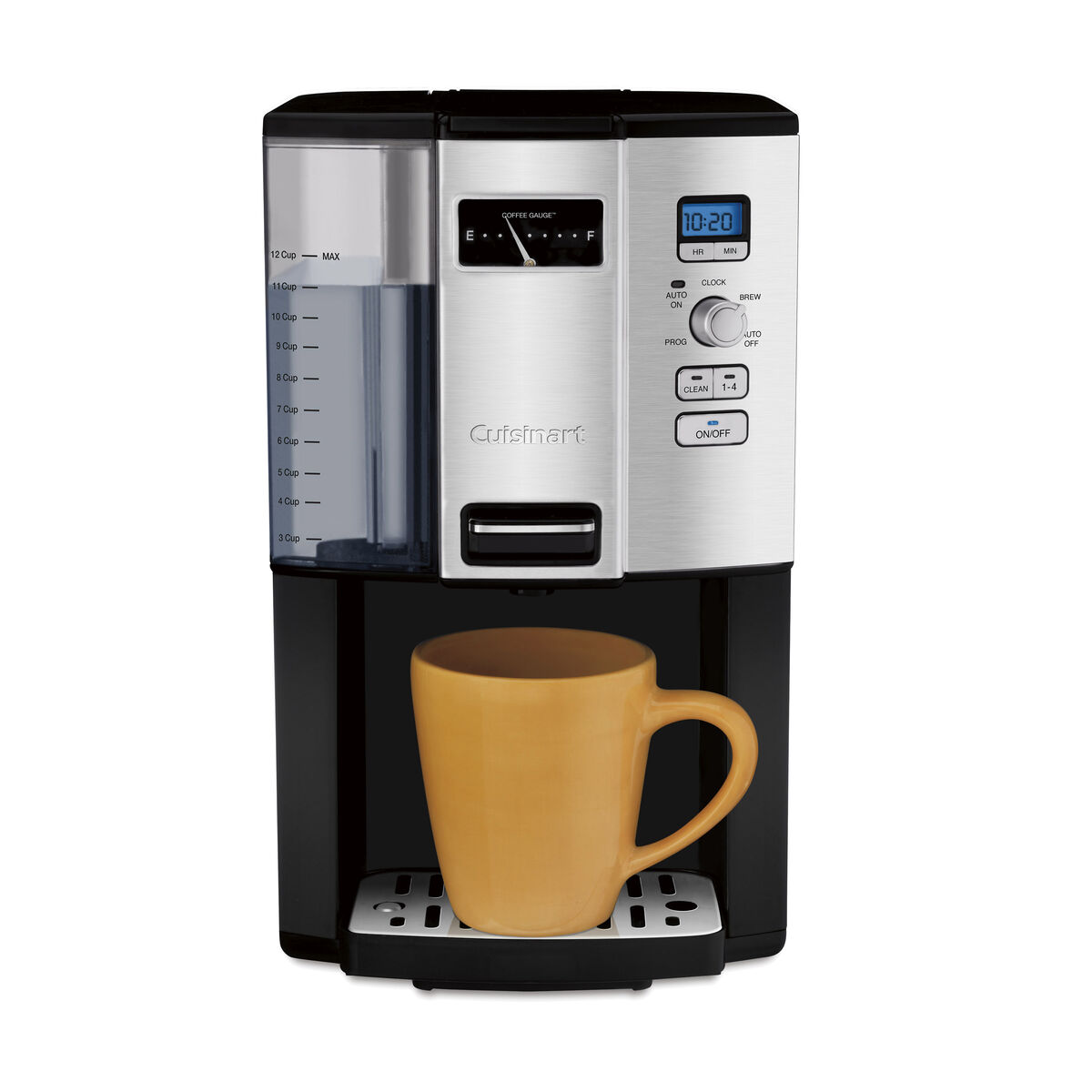
Your needs, this model
Does it fit your priorities?
Does the DCC-3000 brew a cup at a time or dispense a larger grounds batch one cup at a time?
It brews ground coffee into a double-wall internal reservoir rated for twelve five-ounce cups, then a lever serves coffee from that batch. It has no pod route and does not freshly brew each lever pour.
Explore this need in the finder →Can the DCC-3000 schedule a grounds batch and also make a smaller 1–4 cup cycle?
Yes. The exact booklet documents a scheduled Auto On up to 24 hours ahead and the dedicated 1–4 cup setting. Its adjustable Auto Off range is 0–4 hours after brewing, with two hours as the default.
Explore this need in the finder →Does DCC-3000 serve a pod-and-grounds household, or only its grounds-batch routine?
The exact unit includes a permanent gold-tone basket filter for grounds, but it has no compatible pod format. It is a Coffee on Demand batch dispenser, not a dual-input pod machine.
Explore this need in the finder →The discontinued Cuisinart DCC-3000 is a grounds brewer for households that want a larger batch kept inside the machine and dispensed a mug at a time. It is not a capsule single-serve machine: you brew a shared reservoir first, then use the front lever to pour. That distinction makes it a useful fit for several people who come back to coffee through the morning, but a poor match for anyone who wants individually brewed cups, pods, or a conventional carafe they can carry to the table.
A batch brewer without a separate pot
Cuisinart rates the coffee reservoir for 12 cups. The DCC-3000 booklet defines a coffee-maker cup as five fluid ounces, so its nominal holding capacity is 60 ounces rather than twelve large mugs. The reservoir is double-walled and the manufacturer says it keeps coffee hot for hours; the machine has no warming plate under a glass pot. A front gauge indicates how much brewed coffee remains, and a lever lets you fill a cup on the drip tray. The dispenser light turns on when the lever is pressed.
This is still batch drip brewing. Fill the removable water tank for the amount you plan to brew, add grounds in the filter basket, close the lid, and run the brew cycle. The lever only portions coffee out after that cycle; it does not brew each cup fresh as a pod machine would. The 1–4 cup button adjusts a smaller brew, while a 24-hour Auto On setting schedules a cycle in advance. If you value a carafe and want to pour the whole batch at once, this reservoir arrangement is an unnecessary extra step.
Useful schedule and capacity controls
The function dial separates programming from brewing. Auto On uses a time set up to a day ahead; Auto Off can be programmed from zero to four hours after brewing, with two hours as the manual's default. The two settings are not the same thing as the double-wall reservoir: one schedules when brewing starts or the brewer switches off, while the enclosed coffee tank is the serving vessel. The machine also has a Clean indicator and a self-clean cycle for mineral buildup, a five-beep completion signal, and a one-minute backup for settings if power is briefly interrupted.
The manual's capacity mark is built around small five-ounce cups. If your household uses ten-ounce mugs, plan for about six mugfuls from a full reservoir, not twelve; the cup gauge helps you estimate what remains but is not a precision volume readout. Cuisinart's setup instructions call for a cup or mug of at least ten ounces at the dispenser. Do not mistake the “1–4 cup” button for a single-cup pod setting: it is for a small grounds-basket batch.
Filter setup and cleaning are part of the routine
The exact product page lists a permanent gold-tone basket filter and a charcoal water filter as features, and the instruction booklet says both come with the brewer. The basket can also take a #4 paper filter. Use one filtering method at a time: the manual warns that stacked filters, too-fine grounds, or coffee spilling over the basket can cause water or grounds to back up. Cuisinart recommends about one scoop per five-ounce cup, with no more than 14 tablespoons in the basket.
The filter basket, coffee reservoir, and drip tray can be washed in the upper rack of a dishwasher. The water reservoir and reservoir lid are not dishwasher-safe; wash those by hand and keep water out of the base when the coffee tank and basket are removed. The coffee reservoir can contain hot coffee, so let it cool before lifting it out. When the Clean light flashes, the manual directs you to remove the charcoal water filter, use a one-third vinegar/two-thirds water solution in Clean mode, then run a fresh-water cycle before brewing again.
Who should consider the DCC-3000?
Consider it if your priority is serving a prepared grounds batch in repeated small pours without putting a glass pot on a heater. The removable water tank can be filled at the sink, the Coffee Gauge gives a quick remaining-coffee cue, and the built-in serving lever keeps the reservoir on the counter. It is particularly different from a small carafe brewer such as the DCC-450PK: that model makes only a four-cup pot with a steel carafe and plate, whereas the DCC-3000 has a twelve five-ounce-cup internal coffee reservoir and no carafe.
If you prefer a familiar pot-and-warmer routine, compare the current-reference DCC-1200NAS, which makes a 12-cup glass carafe and gives you Low/Medium/High plate settings. If you want true pod-sized individual brewing, a model such as the SS-9 is a different format. The DCC-3000 is marked discontinued and out of stock on Cuisinart's page. On any used or remaining-stock listing, check the bottom label for the exact DCC-3000 code and confirm that the removable reservoir, coffee tank, basket holder, drip tray, gauge, lever and controls are all present and working. Its product-page feature list gives no footprint dimensions, so measure the space and overhead clearance of an actual unit rather than relying on another model's numbers. This assessment uses documented model information, not hands-on ownership or independent brew measurements.
Search Amazon for the Cuisinart DCC-3000; verify the model label and condition because this exact version is discontinued.
Key details at a glance
| Coffee formats | grounds |
|---|---|
| Brew styles | standard |
| Integrated coffee grinder | No |
| Pod serving size or maximum | oz |
| Capsule espresso choices | oz |
| Finished-coffee serving vessel | Built-in batch reservoir, served by lever |
| Internal coffee-tank capacity | 12 cups |
| Carafe | No separate carafe |
| How a finished batch stays warm | Double-wall internal coffee reservoir; no warming plate |
| Permanent coffee filter included | Yes |
| Adjustable warming-plate temperature | No |
| Bold/Regular strength control | No |
| Dedicated 1–4 cup batch setting | Yes |
| Separate hot-water route | No |
| Manual steam wand | No |
| Milk-frothing tool included | No |
| Milk-frothing tool heats milk | No |
| Cold Brew with grounds | No |
| Over Ice with pods | No |
Use the exact model’s instructions for operating limits, supplied equipment and version differences.
Sources for this assessment
Match the carafe to your coffee routine.
Choose between a warming plate and an insulated pot, then check what the exact box includes.