
Your needs, this model
Does it fit your priorities?
Does the K-Brew + Chill actually cool coffee in the machine, rather than just brewing hot coffee over ice?
Yes. The exact guide says the K-Cup drink is brewed hot and then cooled by QuickChill; its separate Cold button starts that route. This differs from a hot-over-ice program and from ambient-water grounds steeping. The manual's under-three-minute cooling statement is a manufacturer claim, not an independent timing result.
Explore this need in the finder →Can this brewer meet a grounds-based Cold Brew requirement?
No. The K-Brew + Chill guide instructs you to insert a K-Cup pod and use hot extraction before chilling. It does not document loose-ground steeping or a Cold Brew process. If a grounds-based steep is essential, do not substitute this machine-chilled pod drink.
Explore this need in the finder →Does it have an Over Ice button for hot coffee brewed over ice?
No Over Ice cycle is documented. It has a separate Cold setting that chills coffee after hot extraction; ice may be added after the cold brew if desired. If the required routine is hot coffee brewed over ice, choose a model that documents that distinct control and method.
Explore this need in the finder →How many cold drinks can I make in succession, and what happens between them?
When fully charged, the Chill Tank can make four consecutive cold beverages before recharging; the manual says each consecutive drink will be slightly warmer. A one-minute automatic cold rinse follows each cold brew, and the drip tray holds three rinse cycles before it needs emptying. Keep that interval and catch-tray task in mind for multiple users.
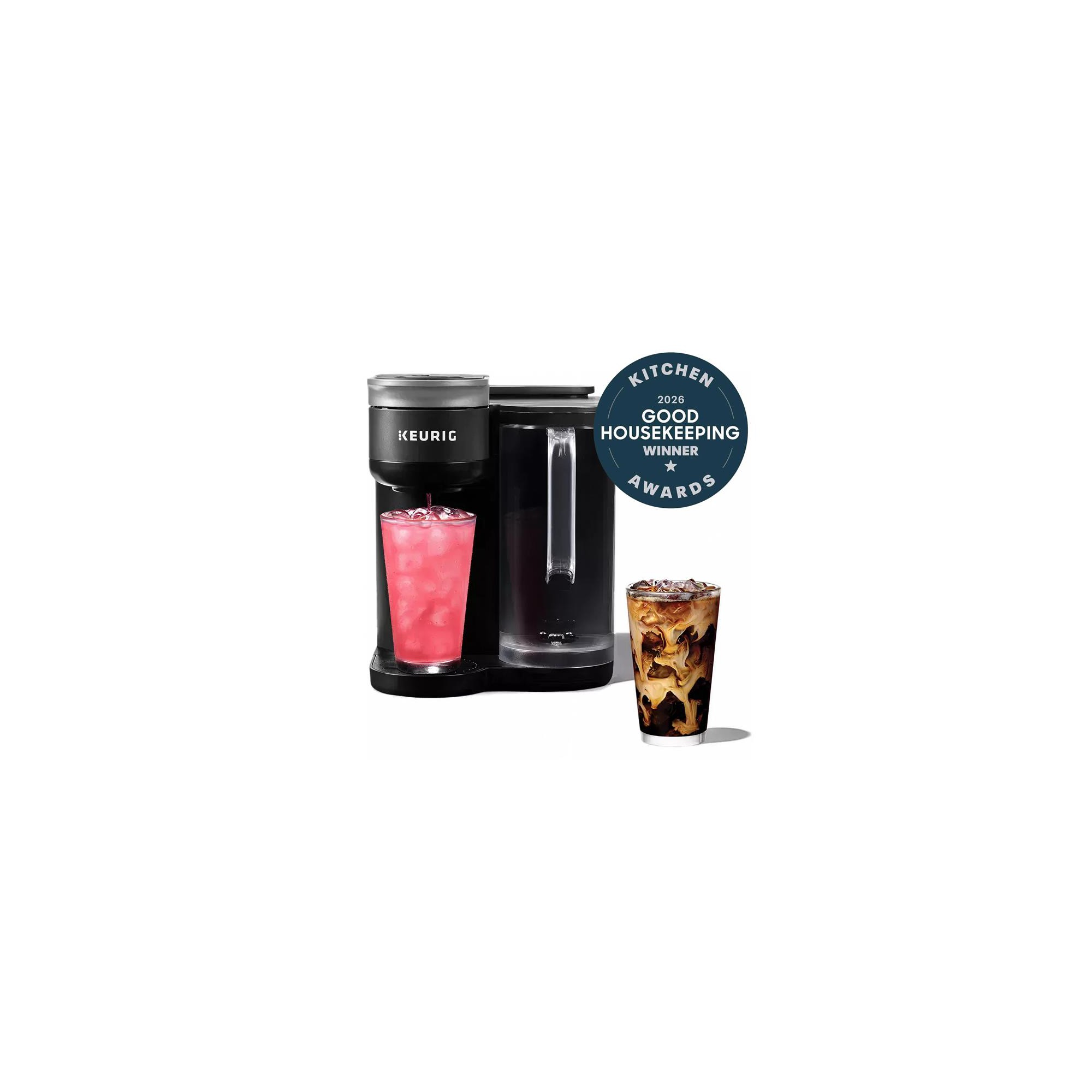
Explore this need in the finder →The Keurig K-Brew + Chill takes a different route to a cold cup than an ordinary brewer with an Over Ice button. It extracts a K-Cup pod hot, then uses a separate water-filled Chill Tank and QuickChill system to cool the drink before it reaches the cup. That can fit a pod drinker who wants cold coffee without first pouring a hot brew over a large amount of ice. It is still a one-cup pod brewer, not a carafe machine and not a grounds-steeping Cold Brew maker.
Cooling is the product's reason to choose it
The official guide labels the controls Hot and Cold and explains that the K-Cup drink is brewed hot before the cooling system chills it. Keurig claims QuickChill can cool a drink in under three minutes; that is a manufacturer claim, not an independently timed result. If you want ice in the finished drink, the guide says to add it after brewing, leaving room for milk or sweetener. The manual doesn't call this an Over Ice brew routine, so it should not satisfy a requirement for hot coffee deliberately brewed over ice. Nor does rapid chilling turn the method into low-temperature grounds steeping: this brewer's documented input is a K-Cup pod, and the coffee is extracted hot first.
This distinction matters more than the name. A shopper who wants pod coffee cooled inside the machine can choose its Cold control. Someone who wants a hot-over-ice cycle should look at a K-Iced Plus or K-Elite, which have their own documented Over Ice routines. Someone who wants reusable grounds or actual Cold Brew steeping should select a model that confirms both the grounds route and that process; the K-Brew + Chill does neither in its exact guide.
A 70-ounce water tank does not mean batch coffee
The removable 70-ounce reservoir supplies multiple single-serve brews. The four documented cup sizes are 6, 8, 10 and 12 ounces, and there is a Strong control for a bolder cup. That gives it a smaller starting size than the K-Iced Plus's 8-ounce menu, while retaining a 12-ounce top size. It can also dispense hot water through the usual cup position if you follow the Hot procedure without inserting a pod. There is no carafe, adjustable warming plate, separate hot-water faucet, milk frother or documented loose-grounds cup. If several people expect one brewed pot to be waiting, a carafe model is a better arrangement even if the reservoir on this one is large.
Plan for the Chill Tank as well as the reservoir
The cooling system makes cold coffee possible, but it has its own setup. The manual says to fill the Chill Tank with cool tap water and leave at least six inches of clearance around the brewer for ventilation; it also advises keeping it away from heat sources and direct sunlight. That is a meaningful counter-space requirement, so measure the actual location rather than treating it like a compact basic pod machine. The separate tank needs to be charged before it can deliver its coldest cups. Keurig says the fully charged system can make four consecutive cold drinks; each later cup is slightly warmer. Charging can take up to six hours in High Performance mode and more than seven hours in Quiet mode, and the Cold Charging Bar communicates the state. A cold brew made before the tank is ready is possible, but the manual warns it will not be as cold as a fully charged one.
Each cold drink is followed by an automatic rinse that takes about one minute. The drip tray catches that water and holds three rinse cycles before it needs emptying. That sequence is easy to overlook if you expect one button press and immediate reuse. It is more convenient than managing a separate pitcher of ice, but less instantaneous for back-to-back cold cups than the brewer's marketing shorthand may imply. The Chill Tank also remains active after the brewer's five-minute Auto Off; the Quiet control can reduce or pause its cooling operation when appropriate.
Care is part of the cold-drink routine
The manual recommends a rinse after using flavored coffee, tea, cocoa, refreshers or one-step latte pods, and a cold rinse follows every cold cycle. It calls for descaling every three months or when the indicator comes on, wiping the reservoirs and exterior, and emptying the Chill Tank before storage. After storage or two days without use, the guide says to run a rinse before making a drink. Those extra tasks are the cost of a cooled, ready-at-the-outlet beverage. It also recommends emptying the drip tray every three cold brews. The limited warranty is one year for normal home use in the United States and Canada; service beyond the documented care procedures is not user-serviceable.
Choose the K-Brew + Chill if the defining request is a pod coffee that the brewer actively cools after hot extraction, and you can give its Chill Tank room to vent and time to recharge. It adds a 6-ounce option, Strong, a removable 70-ounce reservoir and a hot-water route. Choose a K-Iced Plus or K-Elite instead if a dedicated hot-over-ice program is what you actually want. Choose a grounds brewer or a carafe system if loose coffee, steeped Cold Brew or shared pot service is essential. This comparison is about the method and operating plan, not a claim that one cold cup tastes better than another.
Key details at a glance
| Coffee formats | pods |
|---|---|
| Brew styles | hot / rapid_chilled |
| Integrated coffee grinder | No |
| Pod serving size or maximum | 6 / 8 / 10 / 12 oz |
| Finished-coffee serving vessel | Single cup |
| Permanent coffee filter included | No |
| Adjustable warming-plate temperature | No |
| Bold/Regular strength control | Yes |
| Dedicated 1–4 cup batch setting | No |
| Single-serve grounds cup included | No |
| Removable reservoir | 70 oz |
| Single-serve water reservoir | 70 oz |
| Separate hot-water route | Yes |
| Manual steam wand | No |
| Milk-frothing tool included | No |
| Milk-frothing tool heats milk | No |
| Cold Brew with grounds | No |
| Over Ice with pods | No |
| Strength-control choices | 2 settings |
Use the exact model’s instructions for operating limits, supplied equipment and version differences.
Sources for this assessment
Match the carafe to your coffee routine.
Choose between a warming plate and an insulated pot, then check what the exact box includes.